Thursday, February 21, 2019

Land Record Research . . .

Can Be Mind Boggling.

This is a recent analysis of three pioneers in which I draw conclusions for one scenario of the settlement of lands in Western Pennsylvania circa 1800. Two of them were my ancestors and the third had several family members who became related through marriage.

Analysis of one of several scenarios for the settlement of Western Pennsylvania circa 1800.

Following the Treaty of 1784 with the Iroquois, the state of Pennsylvania surveyed the land, completed the Donation Land Lottery for those who had served with Pennsylvania in the Revolutionary War and opened the remaining land for settlement. Having done exhaustive research of the land records of three early settlers in Butler County, Pennsylvania, onto that land; it is my belief that the following is an acceptable conclusion.

Luke Covert my 4x ggrandfather, Isaac Cornelius another of my 4x ggrandfathers, and James Campbell all arrived in the new County of Butler circa 1800. Prior to 1800 the land had been a part of Allegheny County. While these new arrivals were beginning the hard work of clearing the land and building their cabins in order to establish homes for their scattered families, the new county was in the process of establishing the groundwork of itself as a center of government and a courthouse including a Register & Recorder's office were still in the planning. The county was finalized in 1804.

Research has indicated that taking the steps to legalize the ownership of the lands was often delayed in many cases for years. That is not to say there was no buying or selling going on within the settlements as shown by registered agreements and exchange of payments even though official patents had not been issued. 

It would be noteworthy to say here that until a land patent is approved for land owned by the state, it technically remains the property of the state.  The other side of the coin is that at that time the state continued to encourage pioneers to settle free of charge for a period of time on these lands and then gave them the opportunity to acquire ownership at low cost as a result of the Homestead Settlement Acts. This then lead to more rapid growth of the counties and the resulting taxation in the best interest of the state.

And so getting back to our three settlers; once they arrived they began to clear their settlements all of which were located in Slippery Rock Township, Butler Co, PA. In 1854 the lands of Luke Covert and James Campbell became part of Brady Township after a division of townships in the county.  When Worth Township was divided from Slippery Rock Township, the Brady/Worth boundary divided the settlement of Isaac Miller Cornelius between the two townships.

With no records in the Warrant Registers on file at the PA Archives and no registered Deeds of purchase in the files of the Butler County Courthouse it became apparent that none of these three early settlers took official steps to purchase the land from the state of Pennsylvania. They were not listed in the PA Donation Land Lottery and their lands were not part of the Donations Lands located in the surrounding area. Nor were these lands owned by land speculators.  The research process indicates this was not an unusual situation and further research of other early settlers of the county would probably reveal the same scenario.

As time went by and the county continued to grow and mature, many of the next generation, in order to establish ownership of the lands they had helped their fathers clear and produce from, began to take the legal steps to protect their rights.

In the case of Luke Covert, his son Jacob was the one who did just that. In 1817 father and son registered an agreement whereby Jacob received his father's blessing to the land and Jacob could then move ahead and claim the land. But again no one was in a hurry. In 1821 they moved forward and had the agreement registered with the county. Then in 1831 Jacob took the first required step of applying for a land warrant. He submitted a proof of settlement in which he state that he and his father had cleared the land. He was then required to have the property surveyed. The warrant application and survey were then submitted to the state and the land patent was approved. This often took a considerable length of time to be processed.

Isaac Miller Cornelius, like Luke Covert, settled a tract of land in the early 1800s and in the 1830s divided it between three of his sons. The first registered agreement was with James W. for (per the agreement) an estimated amount of 70-80 acres.  It was written in 1830 and recorded in 1831. Next in 1832 came an agreement with Jesse for 100 acres and a third agreement with Samuel in October 1832 for 125 acres and recorded in 1835. More research is needed to sort out the lands of the three brothers but that is not the purpose of this document. The total of these three agreements is approximately 290 acres; the same amount of land that James W. received a patent for in 1836 to establish legal ownership.

Next is the James Campbell farm. James Campbell was another pioneer to the area who had settled but not purchased his land. James died in 1828 and in his will, he divided his farm into three sections and bequeathed the same to three of his sons. James died in 1828.  In 1837 his son Henry, the husband of Mariah Covert, applied for a warrant of the whole farm as trustee for him and his two brothers. Once again a survey was done at that time and the process of having a land patent was carried out and approved.

Three Settlers with parallel stories draws a fairly clear picture of the path these families followed to establish the beginning of their family history as part of the development of this area of Western Pennsylvania.

My conclusions are based on records on file at the Pennsylvania Archives and Butler County Courthouse and trustworthy records and writings of others who have studied the process and history of the settling of the lands at the time.  As always I thoroughly enjoyed the challenge of the research and have attempted to be as accurate as possible; realizing that my conclusions are always subject to additions and corrections.

Gayle
©WPA_twig
February 21, 2019


Thursday, January 10, 2019

Coming to America - Narratives - No.2

This is the second in a series of narrative blog posts of my parental ancestors. If you are the grandchild, great grandchild or great great grandchild of Arabelle Nancy Coovert Barnett, these are probably your ancestors as well.

For my family research purposes I count generations beginning with the earliest relative who came to America. Today's first generation ancestor is Barbara Lucas van Kessell


Barbara Lucas van Kessel Covert


Barbara Lucas van Kessel Covert was born about 1628 in Netherlands as the first child of Lucas Van Kessel. Barbara was baptized March 5,1628 in Heusden, Netherlands.

When she was 17, she married , Dec 1645 in Swaegh, North Holland, Netherlands. Swaegh was a village neear Hoom. The record of their marriage appears in church records of Heemstedt, North Netherlands. 

At the time of her marriage the Dutch India Trading Company was hiring people for their fur and trading buisness in America. They offered free passage and land upon arrival to single and young married person with no children. In 1651 Barbara and Teunis came to America leaving four children in the Netherlands. The youngest was a son, Hans who was an infant. 

They arrived in 1651. Barbara's name was recorded in the patronymic manner as Barbara Lucas (daughter of Lucas) and no surname. By 1687 due to English influence, surnames were being used and she began using Coevers which was later Americanized to Covert.

Barabara was still living in April 1700 when she was named in a sale of property recorded 29 Apr 1700 in colonial New York. The property was known as "Markier" plantation and was located in Flatbush.

Teunis and Barbara had the following children:

  1. Lucas Teunise Covert was born on 24 Feb 1647 in Holland, Reusel-de Mierden, Noord-Brabant, Netherlands. 
  2. Jannetje Covert was born on 29 Mar 1648 in Brooklyn, Kings, New York, United States. 
  3. Aeghie Teunis Covert was born in 1650. 
  4. Hans Teunisen Covert was born in 1651 in Heemstede, North-Holland, Netherlands (Record found in Heemstede, Netherlands Church records. ). He died about 1723 in Millstone, Somerset, New Jersey, USA (will written 1719; proved 1723). He married Jeanne Brokaw Covert in 1688 in Brooklyn, NY.
  5. Altje Teunise Covert Post was born in 1652 in Brooklyn, Kings, New York, United States. 
  6. Mauritz Teunise Covert was born on 05 Dec 1663 in Brooklyn, Kings, New York, United States. 
  7. Annetie Teunise Sprong. 


Monday, January 7, 2019

Coming to America Narratives - #1


Today I am beginning a series of narrative blogposts of my parental ancestors. If you are the grandchild, great grandchild or great great grandchild or Arabelle Nancy Coovert Barnett, these are probably your ancestors as well.

For my family research purposes I count generations beginning with the earliest relative who came to America. The first in the series entitled COMING TO AMERICA will be Teunis Jansen Covert.

Note as you read these narratives that names are often spelled in several ways. And in fact in the 1600s those who arrived in America from Europe did not use surnames. In the case of Teunis, Jansen stands for son of Jans and he would not have had the surname of Covert. The British on the other hand did use surnames and sometime after their takeover of parts of America others took surnames. Often it was the name of the town or village they came from in Europe. However it does not appear Teunis did that unless Covert is a derivation of the town of Coevorden in the Netherlands.

So here we go with COMING TO AMERICA

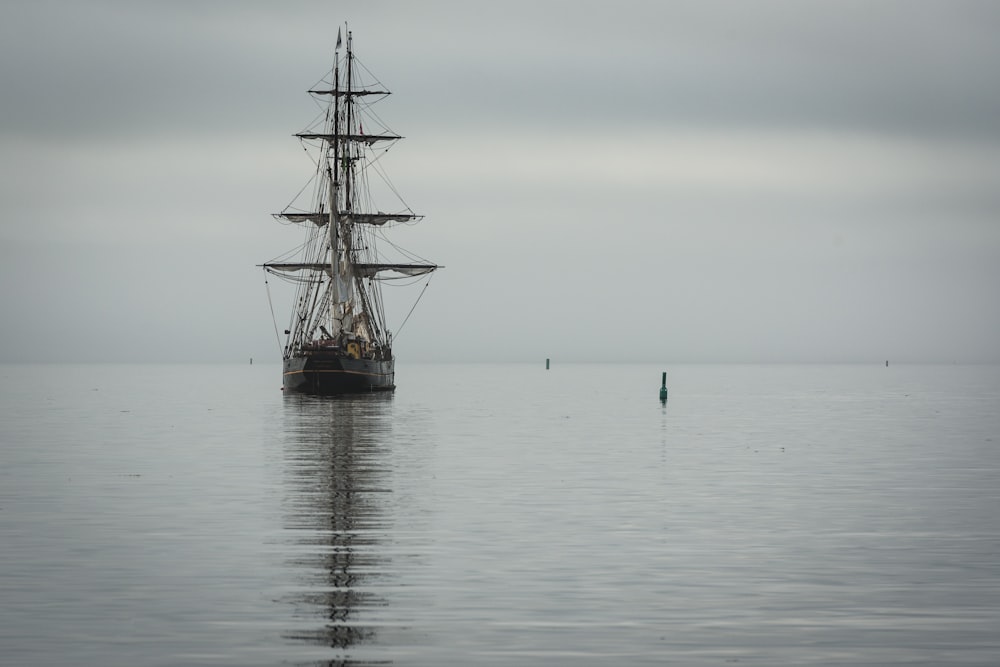
galleon ship cruising on water


                                 Tennis  Jansen Covert                   


Teunis Jansen Covert was born in 1625 as the first child of Jans pratonymic. When he was 20, he married Barbara Lucas van Kessel Covert, daughter of Lucas Van Kessel, in Dec 1645 in Swaegh, North Holland, Netherlands. Their marriage appears in church records of Heemstedt, North Netherlands where they were married in village near Hoom.

Teunis and Barbara arrived in New Amsterdam, New Netherlands, North America on 1650/51 Passenger and Immigration lists gives the year as 1650; His oath of allegience to Britain 1687 indicates he had been in New York 36 years. His son Hans was born in the Netherlands in 1651 and most research gives the arrival date for Teunis as 1651.

He was affiliated with the Dutch Reformed Church, New Amsterdam before 1660 in New Amsterdam (became New York in 1664) later Manhatten. He was affiliated with the Dutch Reformed Church of Brooklyn in 1660 in Brooklyn. He lived in Brooklyn in 1662. He continued to live in Brooklyn, Kings County, New York, Long Island where he was listed in the reconstructed census of 1690.

His regular activity in the church continued and his name appears as a witness in baptismal records thru 1692 when he was sixty-seven years old.

His date of death would be calculated after 1692 although an actual date of death has not been found

Teunis Jansen Covert and Barbara Lucas van Kessel Covert had the following children:

1.     Lucas Teunise Covert was born on 24 Feb 1647 in Holland.
2.     Jannetje Covert was born on 29 Mar 1648 in Holland.
3.     AeghiTeuniCoverwabori1650 in Holland.
4.     HanTeuniseCoverwaborn in 165iHeemstedeNorth-HollandNetherlands (RecorfouniHeemstedeNetherlandChurcrecords.)Hdieabou172in Millstone, Somerset, New Jersey, USA (will written 1719; proved 1723). He married Jeanne Brokaw Covert in 1688 in BrooklynNY.
5.     Altje Teunise Covert Post was born in 1652 in Brooklyn, Kings, New York, United States.
6.     Mauritz Teunise Covert was born on 05 Dec 1663 in Brooklyn, Kings, New York, UniteStates.
7.     Annetie Teunise Sprong was born in New York


Sunday, July 1, 2018

Centennial Tribute to . . .

Dad--- 
Truly taught by example; had a wry sense of humor; and yes, made some mistakes.

TWINS
Dad and his twin sister were the fourth & fifth living children of their parents. 
Of the two, he claimed to be born first.
a second article appeared two days later correcting the parents to W.H. Barnett; not W.C.

Family
Many, many family reunions, get togethers 
and simple visits were to abound. 
This one about 1921.


Honor Student
It was during the Depression; and the little Pennsylvania Dutch farmer next door kept an eye on Dad's family and their needs. At some point Dad had moved onto their farm and
when 'Jimmie' was appointed superintendent of the county home he told 'Peter' (as he called Dad) that he was to come and live in the superintendent's residence with him and Mrs. Barr.
It was so that Dad could attend High School 
and be sure to graduate.


Military
U.S. Army - WWII
Medical Corps
His stories were of stitching small wounds
and caring for soldiers in New Guinea
and overall he portrayed a positive experience.
(except for the bedside kangeroo that woke him one morning.
Oh, and the moldy boots.)


Married
September 24, 1947
Never a harsh word to the love of his life.


Provider
A day off or vacation mostly meant
lots of hard work at home.

Father
Not enough space to express
his acts of love and forgiveness.


Choices of medical treatment were fewer then,
but they sought them and didn't give up 
and happily seven years later, 
a Son.


Cars
Oh my, he did love his cars;
(and I suspect the wheeling and dealing that went along with them)


Work
Two words - Work Ethic!

Over time, two of his brother-in-laws 
also worked at the feed mills, Rae and Chuck.
Then for economic reasons, in his mid 50s, 
Dad went to work in a copper tubing mill 
until he was disabled following an accident at home.


Unconditional Love
"In sickness and in health
for better or for worse
'til death us do part"

Fifty-five Years
and He prayed for God's mercy on her soul
at her deathbed.
  

Perseverance 
Dad was injured in the early 1980s from a fall off the roof of a small barn at home.
It resulted in a complicated break in his hip.
At first he got along with a cane but
complications of aging resulted in him being bed ridden with Mum as his caregiver until she developed cancer. At that time he voluntarily
entered a  nursing home.
Once again he never placed guilt on his children
and every visit found a smile on his face.
(toothless as it was ;)


Passed On
Earthly life ends for all of us
and I thank Almighty God
that Dad's ending moments were peaceful.
   
 Happy 100th Birthday, Dad


So much more . . .
But that will wait for his written family history.
As a result of his love of family and community history, my retirement passion is genealogy and recording our stories.


Sunday, June 17, 2018

It's Time to Begin


Image result for proof argument imageOne of my projects this week is to write a Proof Summary including both types; a 'proof argument' and a 'proof cover sheet' for my great grandfather Jacob J 'Jake' Covert.

He has a couple mysteries in his overall history so I've been taking a look at the 50th anniversary addition of Genealogical Standards and the site below to see how to go about putting a standard proof together.
This is a personal endeavor for my own peace of mind to set forth evidence that I have completed an exhaustive search acceptable in the world of genealogy pertaining to my great grandfather, Jacob J. 'Jake' Covert.
It is my hope that, in the process, either the argument will stand the test; or areas that I haven't 'exhausted' will come to light.
This is important to me because after many years of researching, I am ready to begin writing my family history in a publishable and informative form.
I have been drawn to begin a rough draft since earlier this year but have allowed other research to hold me back. But now it's time and I'm looking forward to beginning.

Monday, March 12, 2018

'Lucky' to Have Him


52 Ancestors in 52 Weeks
Week 11 (two for me)
‘Lucky’

While I prefer ‘blessed’ to ‘lucky’, I understand the application of lucky in the everyday manner. In that light, my Uncle Bob comes to mind.

When the Spanish-American War ended, Spain ceded the colony of the Philippines to the United States in the Treaty of Paris. That was followed by a period of turmoil as the Philippines sought and won their independence. At the time my uncle was stationed there in WWII, the Philippines had become an important ally.
During those tumultuous times with the Philippines and the U.S., William Hall Barnett and Arabelle Nancy Covert Barnett welcomed the birth of their second son, Robert Earl on July 18, 1913.  Sad to say Uncle Bob had a twin sibling who died at birth.  The births took place in the city of Butler, Pennsylvania and were in all likelihood, home births as were their brothers and sisters. Their father, William was in the grocery business with his step-brother at 370 Center Ave. in a section of the city called Springdale. Mother, Arabelle, would have been nearby at their residence along with their first son, William
In two years, Bill and Bob were joined by another brother, James followed in 1918 by the birth of another set of twins, Ralph and Ruth. With a rapidly growing family, Will and Belle made the decision to move out of the city. In 1918 they were renting a two-story farm house in Connoquenessing and in 1920 they began a small truck farm of primarily berries on property about a half mile away. The access to this property was located up a long lane that was subject to drifting snow and spring flooding.
Knowing the Barnetts as neighbors and being aware of the condition of the lane, a little Pennsylvania Dutch Farmer neighbor with a big heart offered them an acre of land at the bottom of the lane. The young family was soon settled into their new home and over time added a barn, chicken coop and shed to the homestead; along with a cow, chickens and a mule or two. Transportation was by wagon and Uncle Bob and his siblings remembered their mother coming home from town in the wagon after a day of selling or trading the berries they had harvested.
Family stories reveal a lively bunch and insight into Uncle Bob’s personality. As the tale goes Grandpa Will was heard to say at the supper table “Bob must you be so ornery?”.  
As he grew into his teens along came motor vehicles and a lifelong passion for mechanics. Once again, there are many family stories about trucks, cars and escapades.
Then came along WWII and young American men being sent around the world. For Uncle Bob this was service with the Army Air Corps and to no surprise, the motor pool, while stationed in the Philippines.
                                                                                
It was on the voyage across the Pacific that ‘lucky’ came into play in the form of surviving a kamikaze attack on the troop ship.
Uncle Bob’s recollection was of the explosion causing two ship decks to disappear around him in the blink of an eye.
The letter of commendation he received revealed a little more of his involvement.

“Corporal Robert E. Barnett . . . Your valiant action in the rescue work following an enemy air attack on the Liberty Ship “Thomas Nelson” off Dulag, Leyte, on 12 November 1944, has been brought to my attention. I wish to commend you for your splendid performance.
Your magnificent efforts in extricating your wounded colleagues and getting them to medical aid represents the highest traditions of the service. At great personal hazard, you have demonstrated that no enemy action, however daring and disastrous, can deter us from our objective of ultimate victory.”


Two years later, January 2, 1946 he was honorably discharged having served with the 498th Bombardment Squadron 345th Bombardment Group and received the World War II Victory Medal with Bar and Lapel Bar.
Following the war, he returned to his family and married his girlfriend Irene, also a WWII veteran. Uncle Bob with the help of his dad and brothers built his first home in the nearby village of Meridian. About ten years late he came back to his roots and replaced the early home of his parents with a new one. 
Sadly, their only child Karen, was stillborn in 1949. Happily, their many nieces and nephews were loved by both of them.  And I might add teased unmercifully by the once ‘ornery’ Uncle Bob. Many of us remember his approach to life and the way in which his mechanical mind could fix anything and put many things to use in inventive ways.
He and Irene had been married fifty-one years when he died at his home June 11, 1997.
We, his nieces and nephews were the 'lucky' ones to have had our Uncle Bob.


Tuesday, March 6, 2018

A Woman of Strength

Revision of an earlier post for 
52 Ancestors in 52 Weeks
Week 11 (week 1 for me)

So where does this woman fit into my family research experience? She falls under the column of facts received from a reliable third party source. In her case for me that would be many conversations with  my father, who even though he did not meet her until her late years, knew much of her life story as told to him by his father, Maggie's brother. For me this is a reliable source of information unless further research proves otherwise.


Meet, my great aunt, Maggie
Margaret Davis Barnett


Just as her mother's, era of the civil war draws my interest so does Maggie's albeit, a few decades later.

I am drawn to Maggie's story by her apparent courageous and adventurous spirit. I have no way of knowing if she felt that in her spirit or if her decision to leave her home and travel across the continent was directed toward a commitment to her family and their care. Either way she took a journey I'm not sure I would have considered at that date and time.

At the age of thirty-four she embarked on a life changing journey. She, two of her brothers and a first cousin boarded a train for Wallowa County, Oregon as homesteaders. Her obituary gives this insight into early years there.

"Miss Barnett was an early settler of Wallowa County coming to the county in 1903... She was also a pioneer school teacher."

The rest of the story, as related by my father, is that she never married and that her life was plagued with financial woes. One of her brother's, Joseph, died twelve years after their arrival and her younger brother was reported to have become an alcoholic. And then of course there was the 'Great Depression'. These and other unknown factors lead her to heavily mortgage her properties (two hundred plus acres as a homesteader) which she struggled with up until she died.

At some point after my father returned from serving in the Army in WWII in 1945, he and his father traveled to Oregon at which time he took these pictures of the two homes she owned at that time.


This post wouldn't be complete without relating the 'other' family story about Maggie.
Family lore has it that Aunt Maggie carried a gun in her apron pocket and that on one occasion for an unknown reason it discharged and wounded her in the leg.
           Note: The story grew as time went by and another relative tells that after being injured she lay by the kitchen door until being discovered some time later.


As a child who grew up watching multiple 'cowboy' and 'pioneer' t.v. series and movies this story of course made Aunt Maggie appear to be bigger than life.


As an older adult I now appreciate that as a result of this character in the family novel, I was able to spend time in the my father's company hearing his voice and experiencing his wonderful sense of humor.


Those memories along with Aunt Maggie's portrait hanging in my home contribute to my ongoing interest in researching our family and passing on what I come to find to others.

This portrait rested in the attic of my childhood home. How it ever survived is amazing. It must have been covered by glass for at least part of that time or it would have been easily destroyed since I believe it is either pastels or chalk.


with Amy Johnson Crow